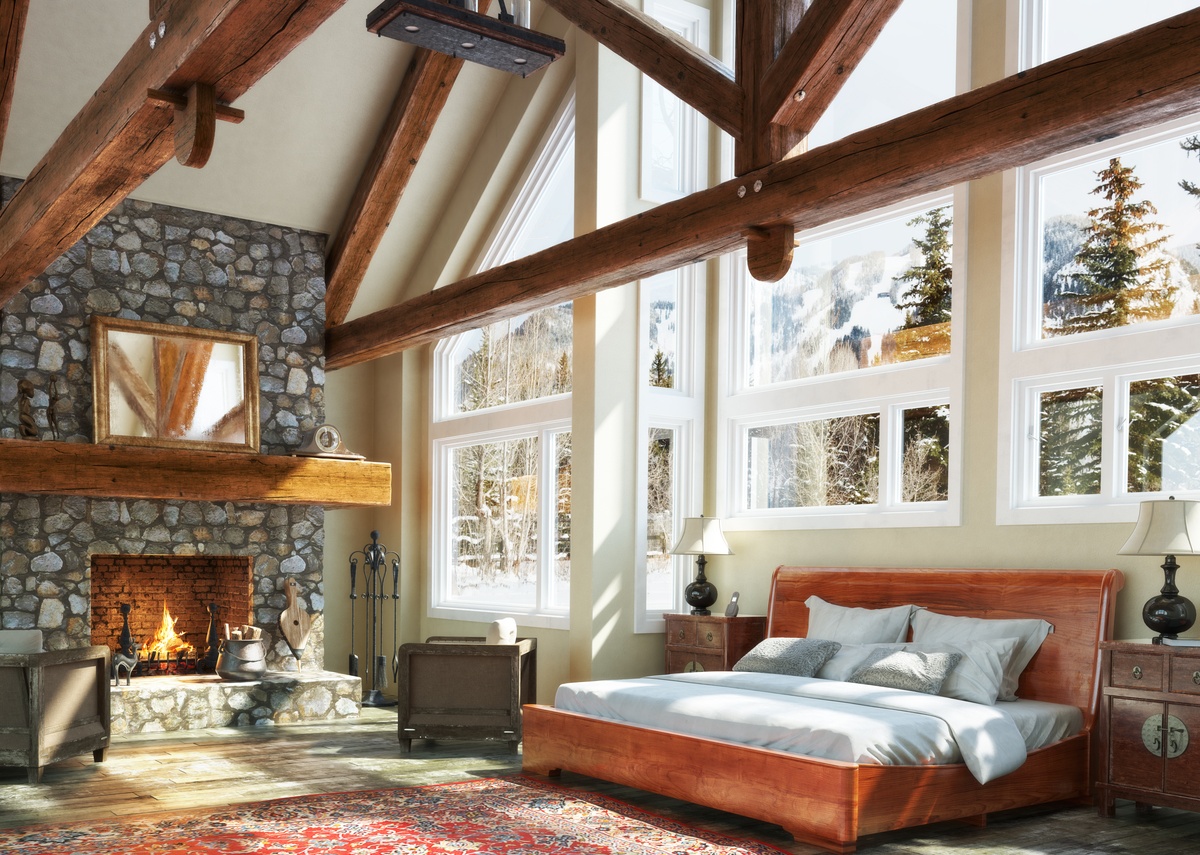
Rustic homes earn their charm through patina, texture, and materials with a little history baked into them. They also pick up weight quickly, especially when dark beams, thick furniture, and busy surfaces all compete for the same space. If a space feels closer to a moody cabin than a relaxed studio, the fix usually comes from editing what feels dense instead of wiping out the character. Here is how to make a rustic home feel more airy with strategic design choices!
Start With the Ceiling Line
A rustic room often feels heavy from the top down, so look up before doing anything. Dark-stained planks, chunky crossbeams, and iron fixtures pull the eye downward, making even a tall room feel shorter, especially in homes with lower natural light. Limewash, warm white paint, or a lighter matte stain on ceiling boards changes the whole mood without stripping away texture, and slimmer pendants or shaded sconces stop the overhead layer from feeling crowded.
Break Up the Brown-on-Brown Problem
Many rustic interiors suffer from too much wood: floors, furniture, trim, shelving, and coffee tables in similar tones. This makes rooms feel flat and dense. Limit yourself to two or three wood finishes, then mix in plaster, stone, soft upholstery, or painted furniture in light, chalky colors to break up the mass.
This is why smart designers balance style and function in a barn home by mixing finish depths rather than stacking the same note over and over. Keep two or three wood tones at most, then interrupt them with plaster, stone, soft upholstery, or painted case goods in chalky shades.
Trade Bulky Pieces for Leggy Ones
Bulky furniture drags down rustic style. Replace deep slipcovered sofas, oversized tables, and heavy hutches with pieces that have open legs, slim arms, and lighter profiles. These changes let air and light move through the space, making the room feel larger.
Consider a rush-seat dining chair, a console with slim metal supports, or a bench with open space beneath. These options give the eye a path to travel and improve airiness.
Style Surfaces Like a Gallery
Rustic homes attract collections. Lean into it! Handmade pottery, found objects, art books, and flea market pieces all belong in a room with soul. However, the trouble starts when every shelf holds stacks, and every corner adds one more accent, because visual clutter makes texture feel heavier. Edit shelves down to a few larger pieces, leave negative space between objects, and keep tabletops open enough to notice the shape of the furniture itself.
Bring in Materials Rustic Rooms Usually Skip
The easiest way to make a rustic home feel more airy is to add what it lacks. Glass, unlacquered plaster, pale linen, parchment shades, light oak, and even a single polished stone surface cut through rougher materials and stop the interior from leaning too earnestly. This is where the room starts to feel more current, more collected, and more personal, without losing the quiet charm that made rustic design appealing in the first place.