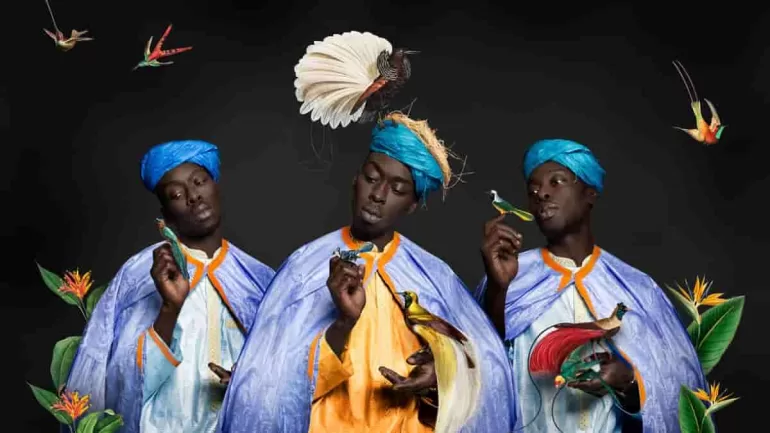
Omar Victor Diop, Allégoria 6 2021. Pigment inkjet printing on Canson Infinity Arches 88 paper © Omar Victor Diop – Courtesy Galerie MAGNIN-A, Paris
Senegalese photographer Omar Victor Diop challenges historical narratives, offering a fresh perspective on African identity, migration, and protest in his innovative photo projects.
BY KAZEEM ADELEKE, ARTCENTRON
Omar Victor Diop, a celebrated Senegalese contemporary artist, is currently exhibiting his remarkable work at the Kunsten Museum of Modern Art. Renowned for his striking photographic art, Diop captures the essence of modern African identities. His work intricately explores themes of history, diasporic experiences, and the global politics surrounding black resistance.
Diop’s artistic practice impeccably blends photography with diverse art forms, including fine art, fashion, design, and portraiture. His work is distinguished by meticulously crafted, dramatic imagery, featuring himself as a central figure and interlocutor. Through self-portraiture, he engages deeply with complex themes of representation, community embodiment, and self-fashioning.
Omar Victor Diop: Celebrating African History Through Art
This exhibition brings together, for the first time, three interconnected bodies of work completed by the artist between 2014 and 2021: Allegoria, Diaspora, and Liberty, along with a commissioned piece from Autograph. In these works, the artist explores complex themes of African identity, migration, black protest, and the global environmental crisis. Diop challenges viewers to rethink the historical representation of African figures, protests for freedom, and humanity’s environmental responsibilities. Each series draws on different aspects of African and global history, making a compelling statement on the importance of history, identity, and justice.
Diaspora (2014): Rethinking African History Through Art
In Diaspora, Diop immerses himself in a visual exploration of Africa’s historical connections with Europe, spanning from the 15th to the 19th centuries. The series draws inspiration from Western portraiture of prominent black figures who played important roles in politics, science, and social movements across Europe. Many of these figures are excluded from mainstream historical narratives. Diop’s Diaspora brings these absent stories to the forefront, offering a new perspective on the past.
By infusing historical portraits with modern, playful references, Diop emphasizes themes of identity, discovery, and migration. His journey as an African artist is central to this work. He examines his identity by using himself as the subject in self-portraits, delving into the duality of living a life in a foreign space while seeking recognition. In particular, Diop draws parallels between historical African figures in European courts and modern-day footballers who experience similar struggles with recognition and belonging. The project is not only a reflection on personal and collective identity but also challenges audiences to reconsider how African history is told.
St. Benedict of Palermo: A Contemporary Reinterpretation
In the Diaspora section of his exhibition, Omar Victor Diop presents a powerful reinterpretation of Saint Benedict of Palermo (1526-1589). In this piece, Diop places himself at the center, adorned in a golden choir gown, symbolizing both spiritual and cultural significance. His posture, with arms outstretched as if welcoming the audience to the house of the Lord, calls attention to the intersection of faith, identity, and contemporary culture. Holding a golden soccer ball in his left hand, Diop merges the sacred with the modern, inviting viewers to reflect on the connections between heritage, legacy, and the current global stage.
Saint Benedict, also known as Benedict the Moor, was an Italian Franciscan friar born to African slaves in Sicily. He is venerated as a saint in both the Catholic and Lutheran churches, celebrated for his charity and humble service. Benedict’s journey is marked by his remarkable rise from slavery to sainthood. His is a testament to resilience, devotion, and the power of faith. Beatified by Pope Benedict XIV in 1743 and canonized by Pope Pius VII in 1807, Benedict’s life story resonates with themes of liberation and justice. It accentuates the enduring fight for dignity, making him a powerful figure within the African diaspora.
Omar Victor Diop is St Benedict of Palermo
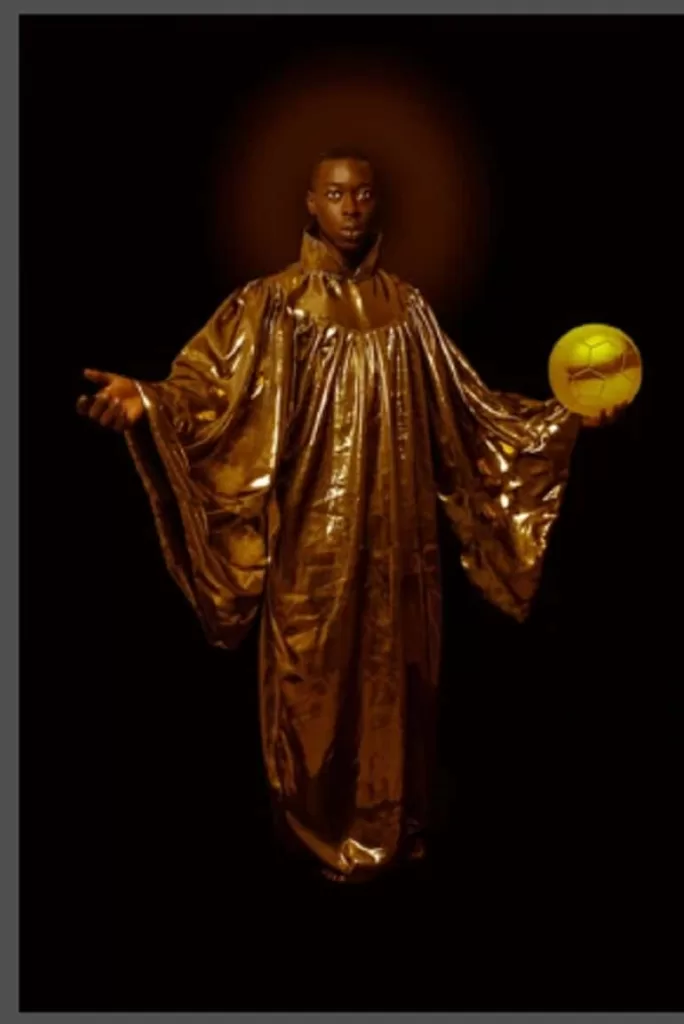
Diop’s depiction of himself as Benedict of Palermo is a historical nod and commentary on the present. The golden soccer ball, an emblem of contemporary fame and glory, contrasts with the sacredness of Benedict’s religious life. It symbolizes the duality of modern-day identities. Through this image, Diop speaks to the complexities of being both a revered public figure and an individual navigating the challenges of belonging and recognition in foreign spaces.
By placing himself in the role of Saint Benedict, Diop bridges centuries of African history. He highlights the overlooked contributions of black individuals in both spiritual and secular realms. His gaze into the distance invites the viewer to look beyond the surface. He calls them to contemplate the ongoing journey of identity, faith, and cultural legacy.
Liberty (2017): A Universal Chronology of Black Protest
Liberty: A Universal Chronology of Black Protest reinterprets critical moments in the global fight for black freedom. Diop chronicles anti-apartheid movements and civil rights campaigns in America and Europe. He also focused and independence struggles across the African continent and the Caribbean. Through this series, Diop highlights the power of solidarity in the ongoing pursuit of justice. He emphasizes the connections between these movements and the shared quest for freedom.
The series underscores the long history of African societies’ struggles against exploitation by Western powers. From the slave trade to colonialism and emancipation, these battles have shaped the diaspora and continue to resonate today. Diop explores how these historical struggles have evolved, from early resistance movements to contemporary protests against racial injustice. By bringing attention to these underrepresented narratives, Diop calls for a deeper understanding of the historical context behind today’s struggles for freedom and equality.
Allegoria (2021): Addressing Climate Change in the Global South
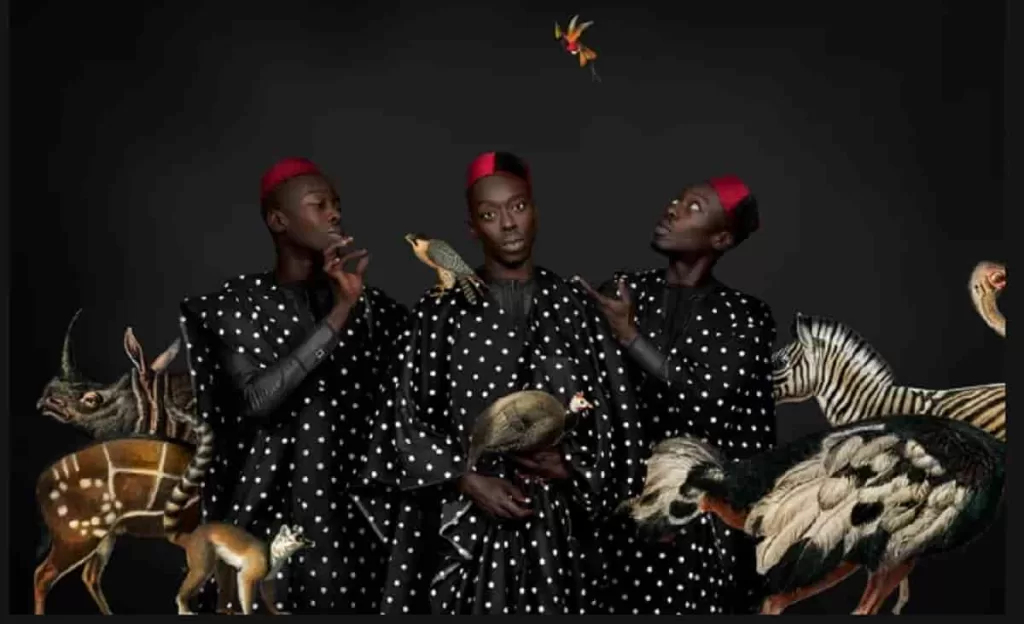
In his latest project, Allégoria, Diop turns his focus to the environmental crisis and its impact on the Global South, particularly Africa. The series features Diop amidst lush arrangements of flora and fauna, blending classical and West African portraiture with religious iconography. Through these metaphorical images, Diop challenges viewers to reflect on the intersection of environmental justice. He exposes the effects of climate change and the global disparities that affect Africa the most.
The Allégoria series draws on various artistic traditions, including classical European painting, Japanese ukiyo-e, and mid-century West African studio portraiture. This fusion of styles creates a compelling visual language that emphasizes the fragility of life. More importantly, it emphasizes the importance of collective action for survival. Diop’s use of symbolic elements, such as floral imagery, further reinforces the urgency of environmental protection.
Through Allégoria, Diop asks us to think critically about our responsibilities as global citizens. His work invites us to consider how we can ensure a sustainable future, especially in regions most vulnerable to environmental degradation. Diop’s exploration of ecological issues is not only a reflection of the current global crisis but also a call to action for a more sustainable, equitable future.
Commemorating the Windrush Generation
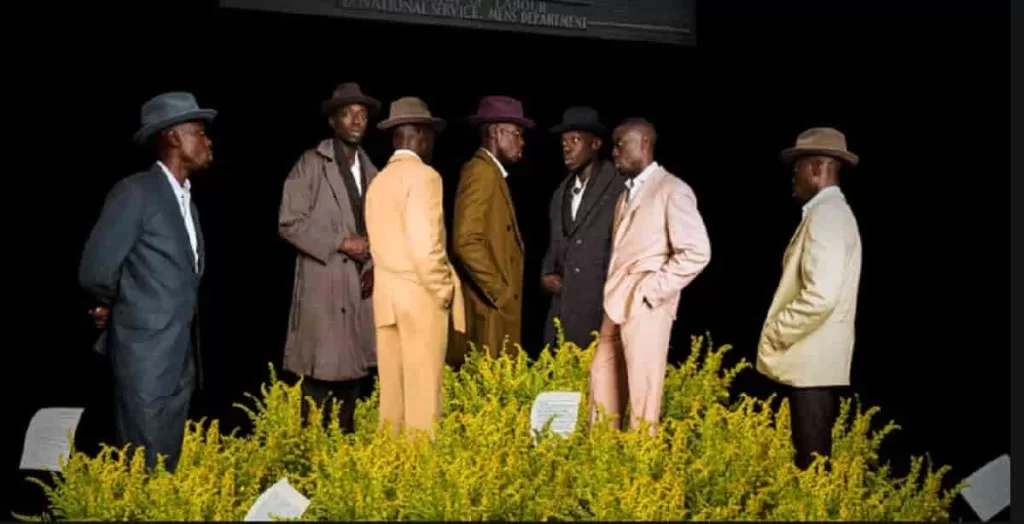
In 2018, to mark the 70th anniversary of the HMT Empire Windrush’s arrival, Diop created two new artworks. They were inspired by iconic archival images from Autograph’s collection. The Windrush portraits depict West Indian migrants beginning anew in Great Britain during the late 1940s. Initially filled with hope, their journey soon faced the stark realities of discrimination and hardship.
About Omar Victor Diop
Omar Victor Diop, born in Dakar in 1980, is one of the most significant Senegalese photographers of his generation. He divides his time between Dakar and Paris. From a young age, Diop nurtured his imagination through photography, literature, and history. This diverse artistic background has led him to explore various forms, including collage, creative writing, and fashion design.
Influences and Recognition
Diop draws inspiration from renowned African portrait artists like Mama Casset, Seydou Keïta, and Malick Sidibé. He also gets ideas from works by French creator Jean-Paul Goude and several Renaissance painters. His works are in prominent collections, such as the Fondation Louis Vuitton in Paris and the Brooklyn Museum. Some are in the Musée de la Photographie in Saint-Louis, Senegal. Diop has also showcased his art in high-profile international exhibitions, including Paris Photo, the Rencontres d’Arles, and Kyotographie in Japan.
A Global Artistic Presence
His photography regularly appears in prestigious publications, including Harper’s Bazaar, Spanish Vogue, and Madame Figaro. Additionally, as an art director, Diop has collaborated with numerous African fashion designers and notable French brands such as Lancel and Pernod Ricard. His first monograph, Omar Victor Diop, was published in 2021 by 5 Continents Editions, and he is represented by Galerie MAGNIN-A in Paris.
Omar Victor Diop: Innovative Approach and Vibrant Imagery
Omar Victor Diop’s exhibition at the Kunsten Museum of Modern Art offers an insightful exploration of black identity, historical narratives, and the politics of resistance. Through his innovative approach and vibrant imagery, Diop invites viewers to engage with the complexities of the human experience in the context of contemporary society. His work not only celebrates African heritage but also raises critical questions about the future. This makes him an important figure in the world of contemporary art.