ARTCENTRON CELEBRATED
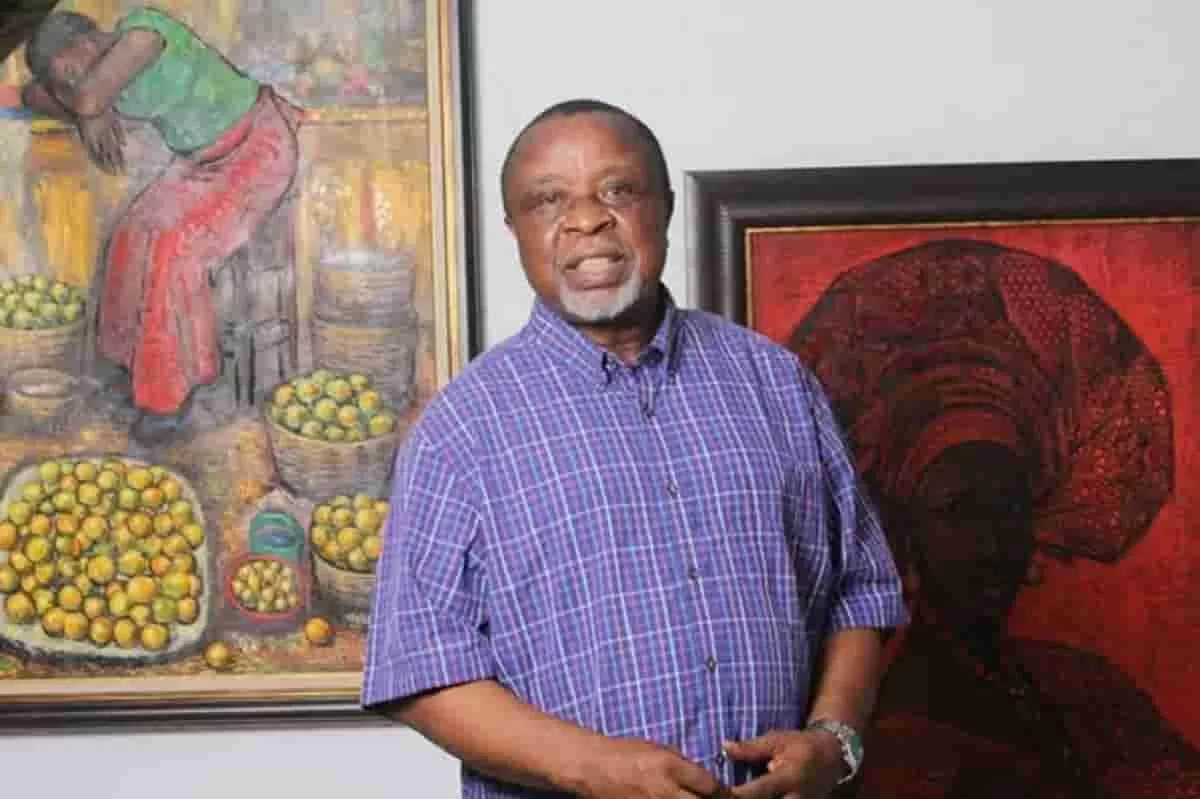
Nigerian artist Kolade Oshinowo, whose five-decade career has shaped the landscape of contemporary African realism. Image: Facebook/Artist
What makes Nigerian artist Kolade Oshinowo a legend? Discover his commitment to technical excellence and his 50-year contribution to visual storytelling.
BY KAZEEM ADELEKE, ARTCENTRON
On February 6, 1948, a future legend of African art was born in Ibadan. Today, Kolade Oshinowo, Nigerian artist, educator, and cultural leader, stands as a titan of contemporary realism. For over five decades, his paintings have captured the pulse of Nigeria with discipline, clarity, and deep empathy. Oshinowo’s career is defined by its remarkable consistency. He remains a master of technical excellence and a champion of social engagement. As Nigeria celebrates his journey, we reflect on a life dedicated to the canvas, the classroom, and the community.
Early Life and Artistic Roots
Born in Ibadan, Oyo State, Kolade Adekunle Oshinowo traces his ancestral roots to Ikorodu in Lagos. His formative years in vibrant Yoruba communities sparked his lifelong sensitivity to social structures and communal life. In 1972, he graduated from Ahmadu Bello University, Zaria, specializing in painting. The “Zaria” atmosphere nurtured his artistic independence and cultural pride. Here, Oshinowo developed a unique realist language rooted in rigorous observation and sharp draftsmanship. He consistently argues that drawing is the backbone of great painting. For Oshinowo, technical mastery does not limit expression—it sets it free.
The Impact of Nigerian Artist Kolade Oshinowo on Realism
Nigerian artist Kolade Oshinowo is a pioneer of contemporary realism. His canvases bring market scenes, ceremonial gatherings, and urban crowds to life. These works do more than show a scene; they capture the collective identity of the Nigerian experience. His realism is never static. He orchestrates his compositions with rhythm and balance, finding order even in the most chaotic city scenes. He uses color thoughtfully to unify atmosphere and movement.
Portraiture is another cornerstone of his work. Whether painting a public figure or a private citizen, he conveys unfathomable dignity. In later years, he pushed boundaries by adding fabric and textured materials to his surfaces. This evolution linked his paintings to Nigeria’s rich textile heritage without losing his signature realist touch.
A Leader in Education and Institutions
Oshinowo’s impact stretches far beyond the studio. In 1974, after a brief stint at King’s College, Lagos, he joined the Yaba College of Technology. This institution became the heart of his professional life. He rose through the ranks as Head of Fine Art, Director of the School of Art, Design and Printing, and eventually Deputy Rector. Under his leadership, he raised curriculum standards and demanded professional discipline. Many of his former students are now leading names in the creative world. His influence also shaped the industry at large. Serving as President of the Society of Nigerian Artists, he strengthened professional networks and fought for the formal recognition of visual arts in Nigeria.
Kolade Oshinowo: Global Recognition and Legacy
Since the 1970s, Oshinowo has exhibited his work across the globe. His pieces are held in prestigious private and institutional collections in Africa, Europe, and beyond. Critics praise his steady vision. Rather than chasing fleeting trends, he refined realism into a powerful tool for cultural storytelling. This dedication earned him the National Productivity Order of Merit Award and a major retrospective on his 70th birthday.
The legacy of Kolade Oshinowo, Nigerian artist, rests on a foundation of three intertwined achievements. He successfully proved that realism remains a vital, intellectual force within modern African art, even as global trends shifted. Furthermore, he shaped the future of the industry by mentoring generations of artists through his rigorous academic leadership at Yaba Tech. Finally, his work as a cultural administrator strengthened the very institutional frameworks that support artistic production in Nigeria today. His paintings preserve visual memories while speaking to current realities. Through his brushes and his lessons, he has painted the very soul of a nation.
Who is your favorite Nigerian icon? Nigerian artist Kolade Oshinowo proved that technical mastery and cultural pride go hand-in-hand. Whether you are an aspiring artist or a seasoned collector, his 50-year legacy offers a masterclass in discipline. Tell us in the comments: Which of Oshinowo’s themes—his bustling crowds or his dignified portraits—resonates with you most?
