ART
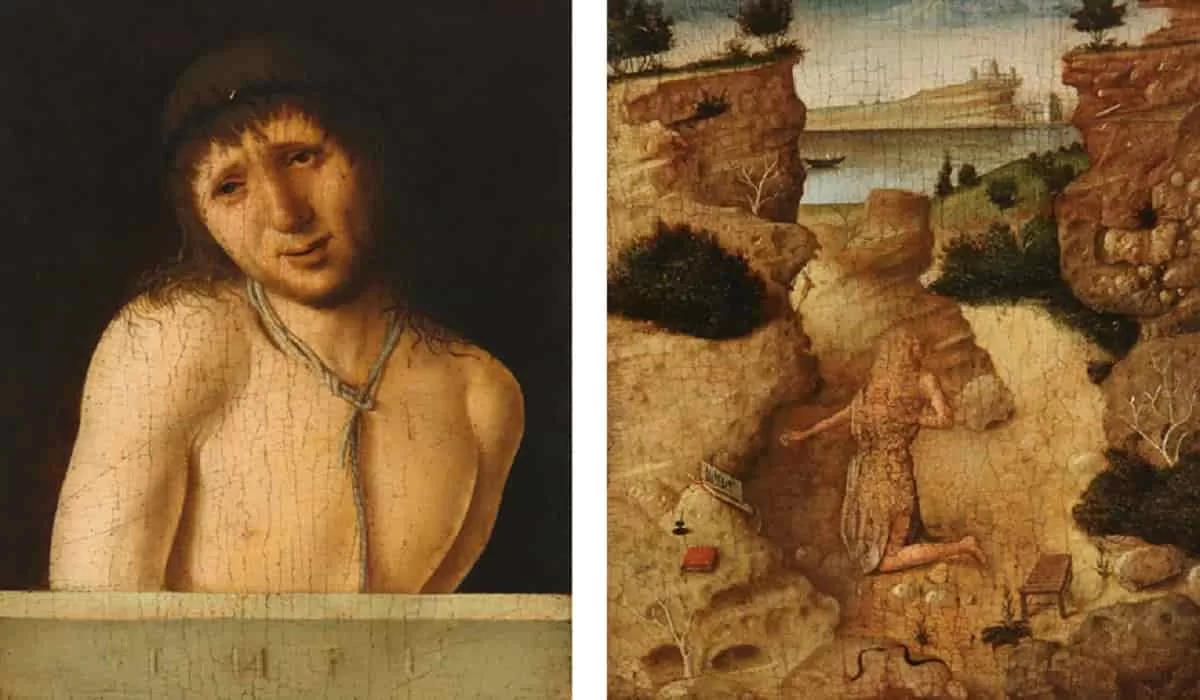
Antonello da Messina painting, Ecce Homo Saint Jerome in Penitence, circa 1430 1479. Italy’s Ministry of Culture bought the painting for an impressive $14.9 million. Image: Image: Sotheby’s
Sotheby’s auction of Antonello da Messina’s Ecce Homo was canceled after Italy purchased the painting for $14.9M, leaving many collectors disappointed.
BY KAZEEM ADELEKE, ARTCENTRON
Collectors across the globe were poised to acquire Antonello da Messina’s rare Ecce Homo painting when it was unexpectedly withdrawn from Sotheby’s Old Masters auction just days before its scheduled sale. Disappointment spread quickly among those eagerly anticipating the auction. Instead of going under the hammer, Italy’s Ministry of Culture acquired the masterpiece for an impressive $14.9 million.
This acquisition ensures that the extraordinary Antonello da Messina painting will remain in Italy. There, it will continue to be part of the country’s rich artistic heritage. With its emotional depth and historical significance, Ecce Homo and Saint Jerome in the Desert exemplifies the timeless beauty of the Renaissance and highlights Antonello’s unfathomable influence on the development of oil painting in Italy.
The Antonello da Messina Painting: A Renaissance Masterpiece
Ecce Homo and Saint Jerome in the Desert is a rare and intimate Antonello da Messina painting that captures the depth of the artist’s emotional and technical prowess. On one side of the panel is an anguished Christ crowned with thorns and bound with a rope. On the other side, St. Jerome kneels in a desolate desert landscape, deeply engaged with a book and an inkwell. This duality of imagery reflects the personal and devotional nature of the work. This compositional style makes Antonello da Messina painting very important. It ensures an understanding of the artist’s religious and emotional expressions.
Sotheby’s estimated the painting would fetch between $10 million and $15 million. They promoted it as the highlight of the Old Masters auction. However, the Italian Ministry of Culture acquired the Antonello da Messina painting rather than letting it go to the highest bidder. This acquisition underscores the nation’s commitment to preserving its artistic patrimony.
Antonello da Messina’s Artistic Legacy
Born in Messina around 1430, Antonello da Messina was one of the most influential artists of the Italian Renaissance. Antonello introduced the oil painting technique to Italy. He blended this method with the emotional and intellectual currents of the Renaissance. Furthermore, his paintings are famous for their stunning realism and psychological depth. Ecce Homo and Saint Jerome in the Desert brilliantly display these qualities.
Though Antonello’s oeuvre is relatively small—only about 40 surviving works—his contributions to the development of Renaissance art were immense. His ability to capture the human soul, as seen in his portrayal of Christ’s suffering and St. Jerome’s contemplation, is a testament to his mastery of both technical precision and emotional expression.
The Journey of an Iconic Antonello da Messina Painting
Since its creation in the mid-15th century, Ecce Homo and Saint Jerome in the Desert has passed through numerous hands, moving from private collections to prestigious galleries. Before its consignment to Sotheby’s, the Antonello da Messina painting was part of a Spanish private collection. It was later acquired by the Wildenstein & Co. gallery in 1967. The painting was eventually sold by the Italian art dealer Fabrizio Moretti to its most recent owner.
This Antonello da Messina painting is more than an artwork. The work is a piece of history that reflects the cultural exchange and appreciation of Renaissance art across Europe. Its acquisition by the Italian Ministry of Culture is strategic. It ensures that this rare and valuable Antonello da Messina painting will remain within the country. Furthermore, it cements Italy’s role as a global leader in the preservation of its artistic heritage.
Protecting and Preserving Italy’s Art
The Italian Ministry of Culture plays a crucial role in safeguarding Italy’s artistic heritage. With thousands of years of history and a wealth of priceless artwork, the Ministry’s efforts to preserve and acquire works like Ecce Homo and Saint Jerome in the Desert are vital to maintaining the nation’s status as a cultural epicenter.
Through strategic acquisitions, the Ministry ensures the preservation of works of art by masters such as Antonello da Messina for future generations. The decision to acquire this Antonello da Messina painting is part of Italy’s broader initiative to protect and showcase its Renaissance masterpieces. This approach guarantees they remain accessible to the public and researchers alike.
Where Will the Antonello da Messina Painting Be Displayed?
Neither Sotheby’s nor the Ministry of Culture knows the specific museum or institution where Ecce Homo and Saint Jerome in the Desert will be on display. However, investigations suggest it is likely to go on display in one of Italy’s prestigious public collections. The Galleria degli Uffizi in Florence and the Pinacoteca di Brera in Milan are among the most likely candidates. Both institutions house significant works of Renaissance art.
As part of Italy’s ongoing commitment to preserving its cultural heritage, this Antonello da Messina painting will continue to inspire future generations. The painting will offer a window into the emotional depth and technical brilliance of one of the Renaissance’s greatest artists.
Preserving the Legacy of Antonello da Messina
The Italian Ministry of Culture acquired Ecce Homo and Saint Jerome in the Desert. This act marks a significant moment in the preservation of Italian Renaissance art. By securing this Antonello da Messina painting, the Ministry ensured that a critical piece of history remains within the country. Now, both the public and scholars can study, appreciate, and admire it there.
This acquisition is a reminder of the importance of safeguarding artistic treasures. It also preserves the legacy of masters like Antonello da Messina. The artist’s works will continue to shape our understanding of the human experience through art.
