ART NEWS
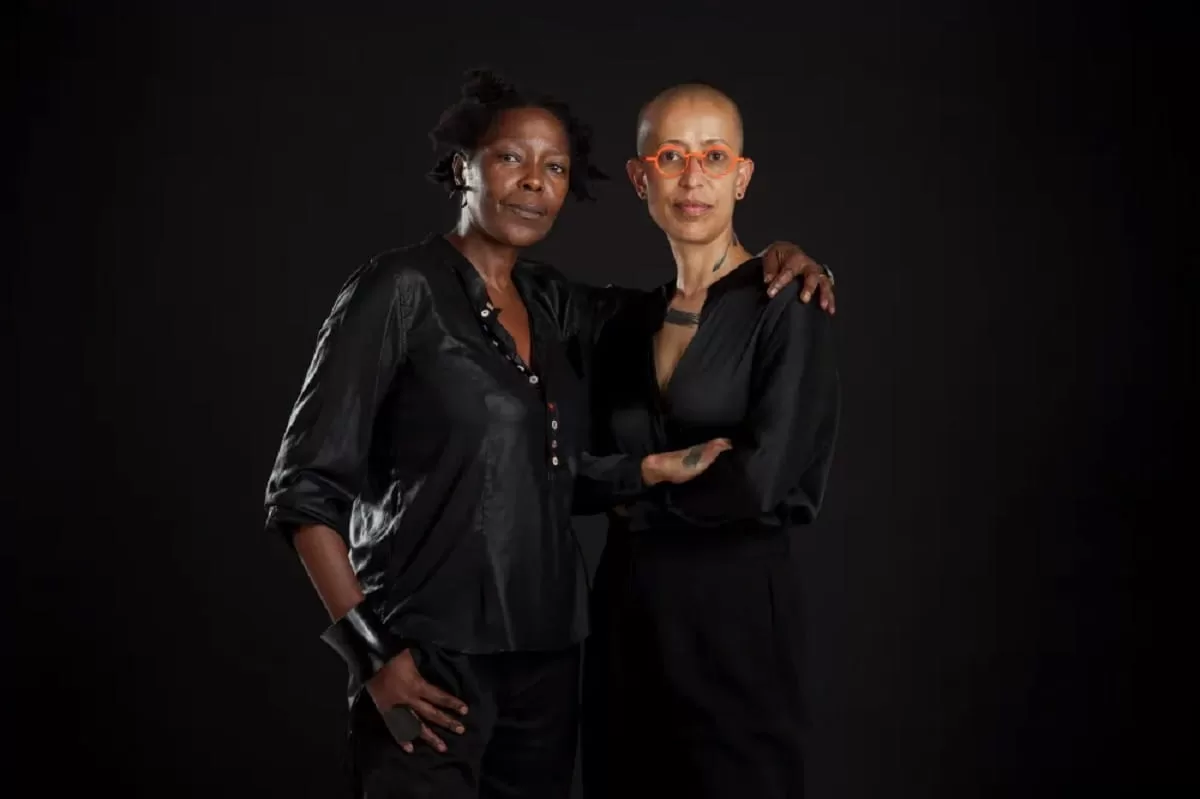
Gabrielle Goliath with Ingrid Masondo, the curator of Elegy, a performance central to the South Africa Venice Biennale censorship debate. Photo: ZUNIS
Gabrielle Goliath’s work sparks a South Africa Venice Biennale censorship row, raising questions about politics and free expression in art.
BY KAZEEM ADELEKE
South Africa’s withdrawal from the 2026 Venice Biennale has sparked intense debate. The decision centers on artist Gabrielle Goliath and her work, Elegy. This performance-based piece addresses gender-based violence, colonial-era genocide, and the war in Gaza. Critics and opposition parties now argue this move represents a clear case of South Africa Venice Biennale censorship.
Gaza Reference Triggers Government Withdrawal
The Department of Sport, Arts and Culture (DSAC) officially selected Goliath in December 2025. Her work included text by Palestinian poet Hiba Abu Nada, who died in an Israeli airstrike. This inclusion became a decisive factor in the pavilion’s cancellation.
Observers claim the government’s response limits what national art platforms may depict. In an open letter to the Ministry, Goliath and curator Ingrid Masondo challenged the state’s authority:
“We do not believe it is the right or duty of a minister… to prescribe or constrain what artists, sports communities, and the public can or cannot reflect upon.”
Claims of Foreign Interference Raise Transparency Concerns
Minister Gayton McKenzie defended the withdrawal by citing alleged foreign interference. He claimed the pavilion risked serving another country’s political agenda. Specifically, McKenzie suggested a foreign government intended to purchase the works after the Biennale. He framed the decision as an ethical matter of sovereignty.
“I have used, and will always use, every opportunity I have to sell our country to the world,” McKenzie stated in an official DSAC release. “We shall give access at the Biennale to artists who promote our country.”
However, Israeli media later named Qatar as the alleged foreign state. Ynetnews reported the claim, citing diplomatic sources. No official confirmation followed. Art Periodic South Africa, the nonprofit managing the pavilion, has not responded publicly. Many see the interference argument as a pretext for restricting politically sensitive art.
Artist Gabrielle Goliath Faces Political Backlash
The pavilion dispute unfolded alongside Goliath’s sudden departure from Goodman Gallery. The gallery ended its decade-long representation of the artist just days before the pavilion cancellation. While the gallery cited financial restructuring, the timing reinforced concerns about the risks for political artists.
Goliath continues to work with Milan-based Galleria Raffaella Cortese. The gallery issued a statement defending her and curator Ingrid Masondo. Supporters view the situation as a critical test of artistic freedom in South Africa.
Minister’s Position Conflicts With Official Foreign Policy
McKenzie has publicly supported Israel. He has urged South Africa to abandon its case at the International Court of Justice (ICJ). This position contrasts sharply with South Africa’s official foreign policy. The state has submitted evidence to international courts accusing Israel of genocide. Human Rights Watch–Gaza 2023 details events in the Gaza war.
This discrepancy fuels the perception of South Africa Venice Biennale censorship. While official policy emphasizes anti-colonial solidarity, the Ministry blocked a work reflecting those same principles.
Opposition Parties Challenge Cultural Intervention
The Democratic Alliance (DA) accused McKenzie of political interference. The party filed a formal challenge with the Public Protector. They argue the withdrawal undermines South Africa’s cultural credibility.
Supporters of Goliath note a “selective sensitivity” in state oversight. While her work addressed multiple histories of violence, only the Gaza reference triggered intervention. The Selection Committee defended the original choice, stating:
“The cancellation of an independent and transparent curatorial process is deeply troubling… We reject all forms of censorship.”
A Defining Test for Artistic Freedom
Efforts to reinstate the pavilion continue. Goliath and Masondo have appealed directly to the Presidency. They frame the issue as a test of national identity.
What began as a curatorial dispute has evolved into a defining example of South Africa Venice Biennale censorship. It raises a broader question: when the state funds art, who decides which truths are acceptable to perform?
