ART
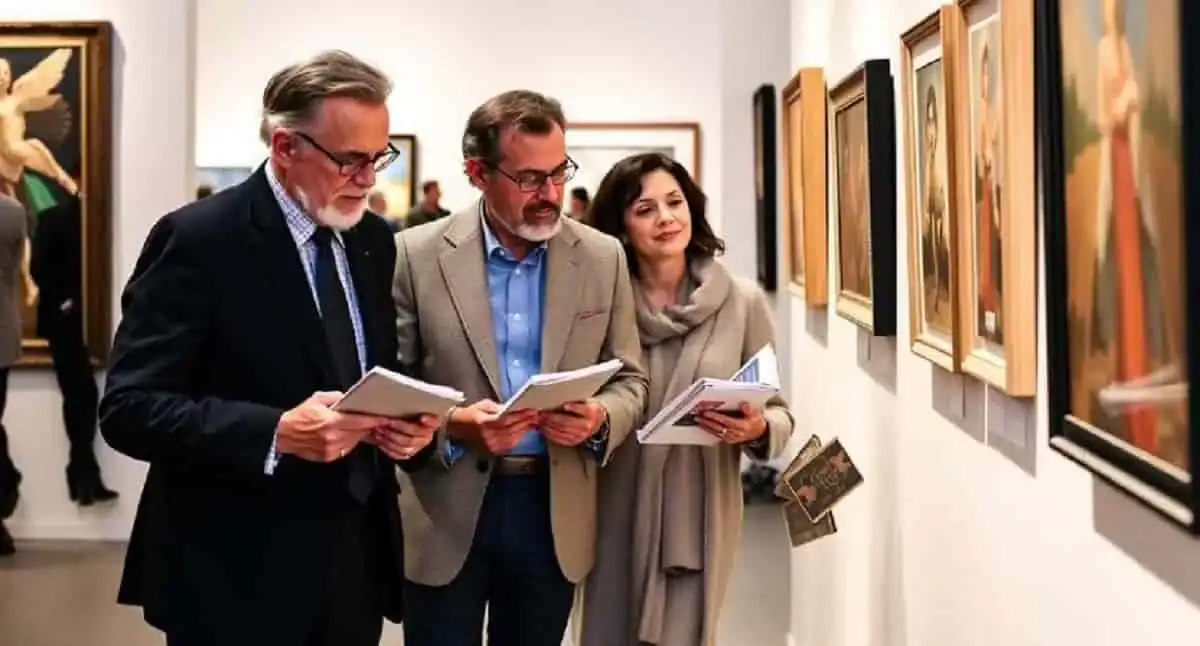
Explore the art fair ecosystem and discover how galleries, artists, collectors, and institutions shape the global art market today.
BY KAZEEM ADELEKE, ARTCENTRON
Understanding the Art Fair Ecosystem as a Strategic Market Structure
The art fair ecosystem functions as a complex, global network that connects cultural production with economic exchange. Far from operating as isolated commercial events, art fairs serve as strategic platforms where artistic value, financial capital, institutional authority, and global visibility intersect.
By compressing months of gallery programming, collector outreach, and curatorial research into a high-intensity timeframe, these events are the primary mechanisms for shaping artistic careers, price formation, institutional acquisition, and international cultural narratives.
Core Components of the Art Fair Ecosystem
Galleries as Market Anchors
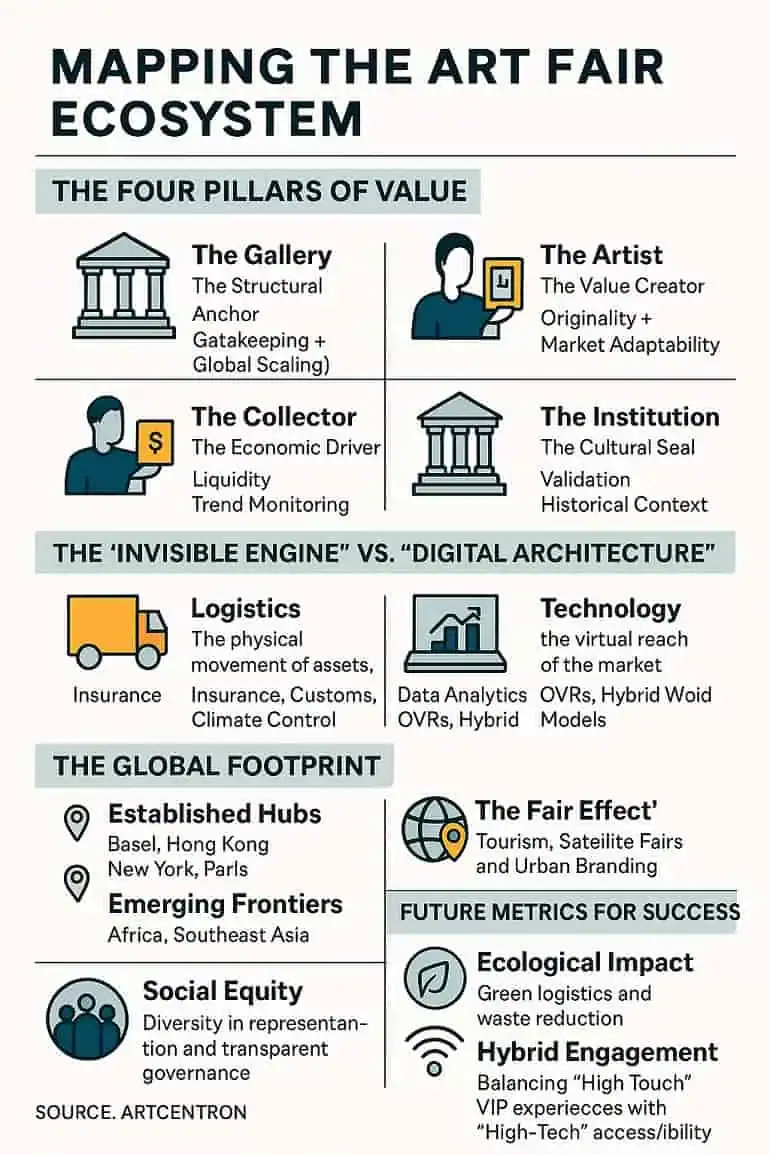
Galleries form the structural foundation of the ecosystem, operating as both cultural intermediaries and commercial entities. Primary market galleries introduce emerging voices and establish critical narratives, while secondary market players reinforce historical significance and stabilize pricing. Through participation, galleries:
- Expand international market reach.
- Strengthen brand authority and institutional credibility.
- Test new artists and curatorial strategies.
- Engage directly with global collectors and museum representatives.
Selective admission processes at leading fairs enforce quality standards, elevating participating galleries as market leaders.
Artists as Primary Value Creators
Artists occupy the central creative role. Art fairs provide concentrated exposure that accelerates recognition and market validation. Inclusion in high-profile fairs frequently reshapes career trajectories, influencing representation and museum acquisitions. Successful positioning depends on:
- Conceptual clarity and originality.
- Consistency in production quality.
- Alignment with contemporary curatorial discourse.
- Market adaptability without artistic compromise.
Collectors as Market Drivers
Collectors supply the economic momentum to sustain the system. Private individuals, foundations, corporations, and museums each approach fairs with distinct objectives. Fairs enable collectors to:
- Access curated selections efficiently.
- Compare market pricing in real time.
- Build direct relationships with galleries and artists.
- Identify emerging talent before institutional validation.
Institutional Power and Cultural Legitimacy
Museums and Curatorial Networks
Museums exert decisive influence by validating artistic relevance. Institutional acquisitions made during fairs often establish new price benchmarks. Curators utilize these hubs to identify practices aligned with their missions and to track global trends, anchoring the commercial environment in scholarly legitimacy.
Foundations and Non-Profit Organizations
Nonprofits introduce long-term value through prizes, commissions, and educational initiatives. By supporting experimental and socially engaged practices that may not yield immediate financial returns, they ensure diversity and critical rigor across the broader market.
The Infrastructure: Physical and Virtual
Logistics, Insurance, and Art Services
A sophisticated operational framework—the “invisible engine”—powers the ecosystem behind the scenes. Specialized logistics providers, insurers, and customs experts enable the secure movement of high-value assets across borders, maintaining market liquidity and ensuring regulatory compliance.
Digital Architecture and Market Intelligence
Digital systems now operate as a parallel infrastructure. Online viewing rooms, pricing analytics, and relationship management platforms extend activity beyond physical venues. This digital architecture enhances transparency, enables year-round engagement, and allows data-driven strategies to guide market behavior.
Media, Branding, and Global Influence
Art Media and Critical Discourse
Art publications and critics shape perception and demand. Editorial coverage transforms commercial transactions into cultural narratives, positioning fairs as cultural reference points rather than purely transactional spaces.
Sponsorship and Luxury Brand Integration
Luxury brands and financial institutions provide financial stability while aligning fairs with global prestige narratives. Curated lounges and brand installations enhance the visitor experience, reinforcing fairs as intersections of culture, commerce, and social influence.
Globalization and Urban Impact
International Hubs and Regional Differentiation
Cities such as Basel, Hong Kong, New York, Paris, and Miami anchor the global ecosystem. Simultaneously, emerging markets in Africa, Southeast Asia, and the Middle East introduce new voices, expanding the market’s geographic and cultural scope.
Cultural Policy and the “Fair Effect”
Art fairs reshape host cities through tourism and infrastructure investment. The “Fair Effect”—whereby satellite fairs and local pop-ups emerge around a central event—amplifies this impact. Cities that align tax structures and visa regulations with these events successfully position themselves as international cultural capitals.
Sustainability and Ethical Evolution
Sustainability is now a defining priority. Organizers are increasingly implementing environmentally responsible logistics and ethical labor practices. Equity in representation and transparent governance have become key indicators of long-term ecosystem health and stakeholder trust.
Art Fair Ecosystem: A Living Network
The art fair ecosystem is a living network that connects creativity, capital, and global audiences. Its ability to align artistic innovation with economic structures makes it indispensable. Understanding this ecosystem is necessary for navigating the forces that shape cultural value on a global scale.
