ART & DESIGN
So, you’ve mastered the art of not cutting off your fingers and can build a birdhouse that doesn’t immediately collapse. Congratulations! You’ve officially graduated from “person with a saw” to “beginner woodworker.” Now, you’re probably wondering what it takes to move beyond wobbly tables and lopsided shelves.
Making the leap from beginner to intermediate is all about refining your techniques and expanding your knowledge. It involves paying closer attention to the small details that make a huge difference in the final product. We’ll give you some practical tips to elevate your woodworking craft and start building pieces you can truly brag about.
Master Your Measurements
You’ve heard the old saying, “measure twice, cut once.” For next-level woodworking, let’s upgrade that to “measure three times, fret once, then cut.” Precision is everything. Inaccurate measurements are the root cause of most woodworking frustrations, leading to gaps, misalignments, and a finished piece that just looks off.
Invest in a quality tape measure, a reliable square, and a set of calipers. Learn to use them with confidence. When you mark your cuts, use a sharp pencil or a marking knife to create a fine, exact line. A thick pencil line can be off by a millimeter or more, and those tiny errors add up quickly.
Embrace the Art of Sanding
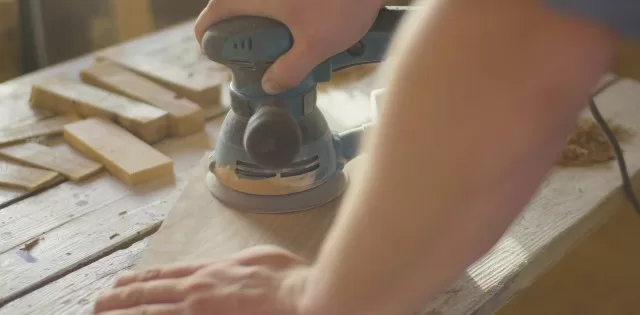
Many beginners see sanding as a boring final step, but seasoned woodworkers know it’s an integral part of the process. Proper sanding makes the wood smooth, and it prepares the surface to accept a finish evenly and beautifully.
Start with a lower grit sandpaper to remove saw marks and imperfections, then progressively work your way up to higher grits. A good progression might be:
- 80-grit to shape and remove major flaws.
- 120-grit to smooth the surface.
- 220-grit for a silky-smooth final finish.
Always sand with the grain to avoid leaving noticeable scratches. It’s tedious work, but your patience will be rewarded with a professional-looking finish.
Learn to Make Sharper Cuts
Clean, sharp cuts separate the amateurs from the pros. A dull blade will tear wood fibers instead of slicing them, resulting in splintering and rough edges. Learning to sharpen your hand tools, like chisels and planes, is a fundamental skill that pays dividends.
For power tools, ensure your blades are clean and sharp. Working with carbide saw blades, for example, can give you incredibly clean and precise cuts, but only if they are well-maintained. A high-quality blade is a worthy investment that dramatically improves the quality of your work.
Go Beyond the Basics
With these tips in your toolbelt, you’re ready to tackle more complex woodworking and rewarding projects. Moving beyond the beginner stage is a journey of continuous learning and practice. Don’t be afraid to challenge yourself, make mistakes, and learn from them. Before you know it, you’ll be building furniture that makes your friends ask, “You made that?”
