ARTCENTRON CELEBRATED
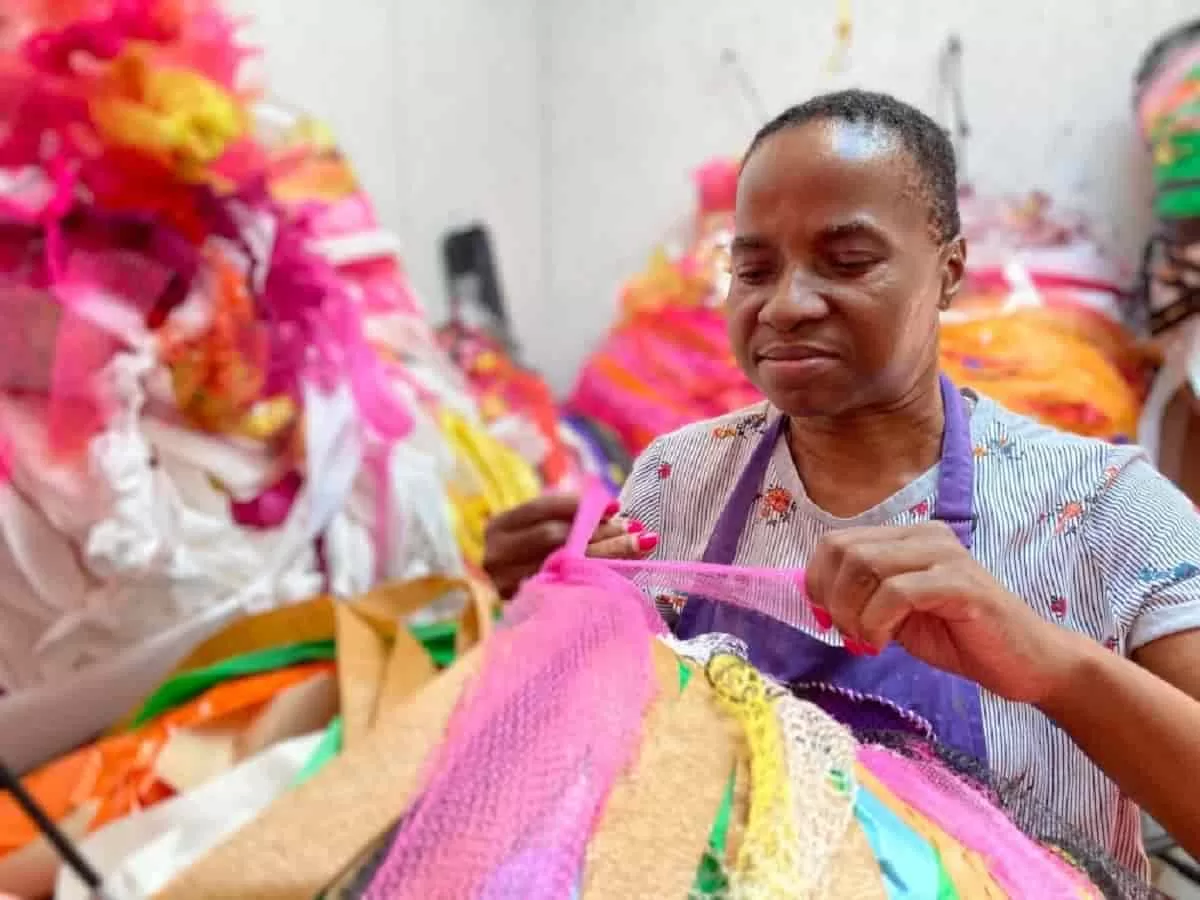
Artcentron celebrates Nnena Kalu, the 2025 Turner Prize winner, whose powerful neurodivergent art installations shatter barriers and transform contemporary sculpture.
BY KAZEEM ADELEKE, ARTCENTRON
In 2025, the contemporary art world witnessed a truly historic moment. Nnena Kalu, the Scottish-born artist whose vibrant abstract sculptures and drawings have captivated audiences worldwide, became the first artist with a learning disability to win the prestigious Turner Prize—the U.K.’s most influential contemporary art award. This moment didn’t just mark another accolade; it signaled a powerful shift toward inclusivity, representation, and the celebration of neurodivergent creativity.
A Creative Force with a Unique Vision
Born in Glasgow in 1966 to Nigerian parents, Nnena Kalu discovered her passion for art early in life. Though she communicates primarily through her work rather than words, her artistic voice is loud, expressive, and unmistakably bold. She is autistic and has limited verbal communication. However, these disabilities have never hindered her creative intensity. If anything, her visual language speaks with greater clarity and emotion than words could ever convey.
For decades, Kalu’s art has been shaped by rhythm, pattern, and tactile exploration. She began making art in the 1980s at Hill House Day Center in Tooting. There, her persistent need to create poured out onto paper and into three-dimensional forms. Over time, her practice evolved from flat works into monumental installations that command space with astonishing presence.
Nnena Kalu Turner Prize Win: A Seismic Moment
At 59 years old, Kalu stood on the coveted stage in Bradford, the U.K.’s 2025 City of Culture, to receive the Turner Prize—worth £25,000. Her victory was not only a personal triumph but also a cultural milestone. The jury, led by Tate Britain director Alex Farquharson, praised her work for its “bold and compelling presence and lively translation of expressive gesture into captivating abstract sculpture and drawing.”
Her winning body of work included two major elements exhibited across major cultural shows:
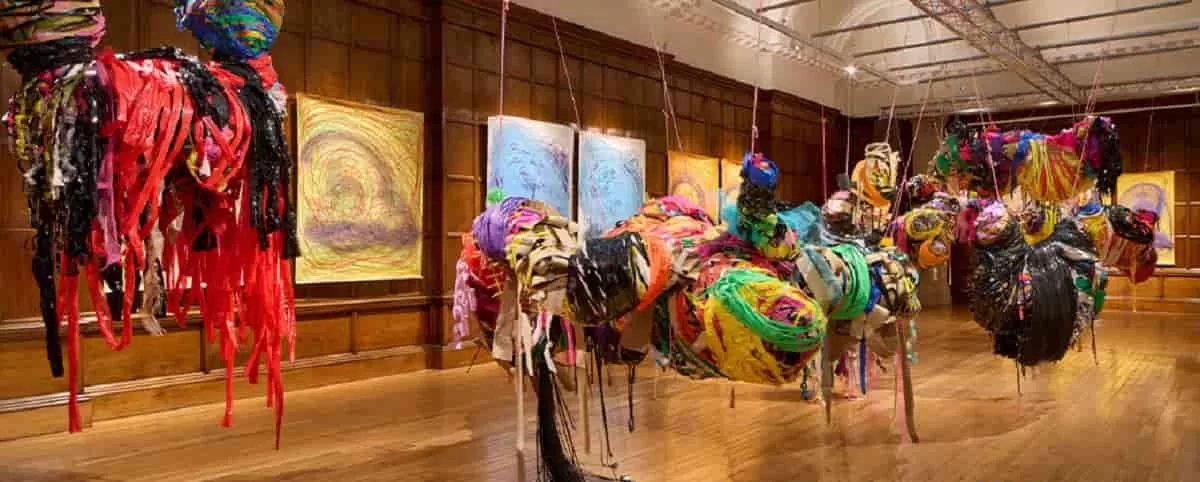
- Hanging Sculpture 1–10: A dramatic series of large, cocoon-like forms suspended from the concrete pillars of a former industrial power station in Barcelona. These sculptures are built through an intense, persistent process of wrapping and layering rope, fabric, tape, and reclaimed materials—yielding objects of visceral texture and emotional weight.
- Large abstract drawings: Vibrant works defined by swirling lines and rhythmic motion, capturing her inner landscape on paper and reflecting an intuitive and deeply human engagement with mark-making.
Art as Communication: The Heart of Kalu’s Practice
What makes Kalu’s art so compelling is not just its texture, color, or scale—it’s the profound way it communicates. With limited verbal language, Kalu uses materials like VHS tape, cling film, rope, fabric, and found paper as extensions of herself. These elements become rhythmic, organic, and alive under her hands. The result: sculptures that feel like bodies suspended in the air and drawings that pulse with humanity.
Many describe her work as more than aesthetic objects. They are emotional landscapes, tactile embodiments of instinctive expression. Critics and audiences alike have noted how her pieces evoke movement and emotion—a visual language that speaks directly to the viewer’s senses and soul.
A Journey of Resilience and Support
Kalu’s path to recognition was not straightforward. For more than two decades, she has been a resident artist at ActionSpace, a London-based studio that supports artists with learning disabilities. It is within this nurturing, creative community that she refined her practice, explored new materials, and was encouraged to experiment without fear.
Charlotte Hollinshead, Kalu’s facilitator and studio manager at ActionSpace, described the Turner Prize win as “seismic.” According to her, the artist’s win has shattered one of the art world’s most stubborn glass ceilings. It is validation, not only for Kalu, but for countless overlooked artists whose voices rarely reach the spotlight.
Redefining Contemporary Art and Inclusion
Kalu’s Turner Prize victory is far more than an award headline. It challenges long-held perceptions about creativity, disability, and who gets to shape cultural narratives. Her work has become a catalyst for conversations around neurodiversity, accessibility, and artistic merit. Kalu’s work is proof that vision, passion, and impact define art and not speech or convention.
By winning the Turner Prize, Kalu has cemented her place in contemporary art history. Her works are now part of major collections, including the Arts Council Collection and the Tate—recognition that underlines her significance in the broader art canon.
A Legacy in Motion
Today, Nnena Kalu’s story is a testament to endurance, imagination, and the transformative power of art. Her sculptures hang in public spaces; her drawings swirl with life and motion. She stands as a beacon of possibility—a reminder that art belongs to everyone, regardless of background, ability, or voice.
Her win is not just celebrated; it’s historic. It resonates with students, artists, and anyone who has ever felt unseen. Through her work, Nnena Kalu continues to inspire—proving that art can liberate, connect, and transcend.
