ARTCENTRON CELEBRATED
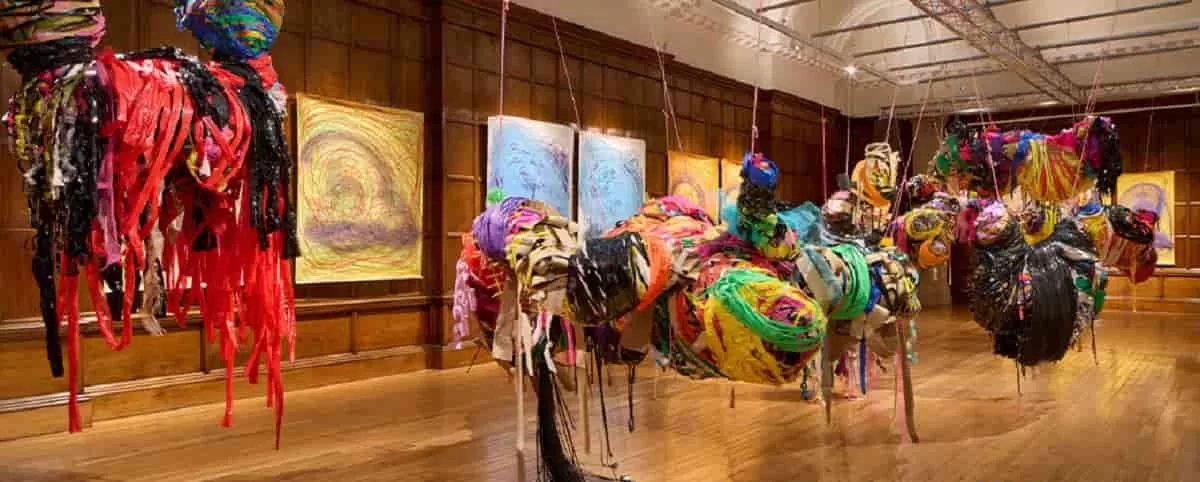
Learn how two extraordinary artists with disabilities, Nnena Kalu and Judith Scott, challenged perceptions and created a lasting legacy in contemporary art.
BY KAZEEM ADELEKE, ARTCENTRON
Nnena Kalu and Judith Scott are extraordinary artists with disabilities who overcame significant social and institutional barriers to make a lasting impact on the contemporary art world. Both faced unfathomable challenges related to their conditions—including autism, learning difficulties, Down syndrome, and profound deafness—but channeled their unique perspectives into groundbreaking visual expressions. Their work continues to inspire audiences and challenge conventional definitions of creativity. It affirms that disability art is central to modern artistic discourse.
Nnena Kalu: Artist with Disabilities Redefining Contemporary Art
Nnena Kalu, born in 1966 in Glasgow to Nigerian parents, is a British artist with a learning disability and autism, which affects her verbal communication. Despite these challenges, she has developed a distinctive visual language that communicates powerfully through form and material.
Innovative Fiber Art: Nnena Kalu’s Unique Sculptural Language
Kalu began making art in the 1980s at a South London day center, evolving from flat drawings to immersive three-dimensional sculptures. She wraps and layers found materials—rope, fabric, VHS tape, cord, and netting—into bold, cocoon-like forms, creating complex fiber art. Her drawings, sometimes made with eyes closed, emphasize sensory engagement and rhythm over traditional composition.
ActionSpace and the Broader Disability Art Movement
In 2025, Kalu made history as the first artist with a learning disability to win the Turner Prize, receiving £25,000 for her vibrant sculptures in high-profile exhibitions. Judges praised her work for its bold visual presence and innovative use of materials, positioning her alongside leading contemporary artists. Kalu’s affiliation with ActionSpace, a London studio for artists with learning disabilities, has been central to her development. Her success represents a broader cultural shift toward inclusivity. She proves that creativity thrives beyond conventional expectations and bolsters the visibility of the disability art movement.
Judith Scott: From Institutionalization to International Acclaim
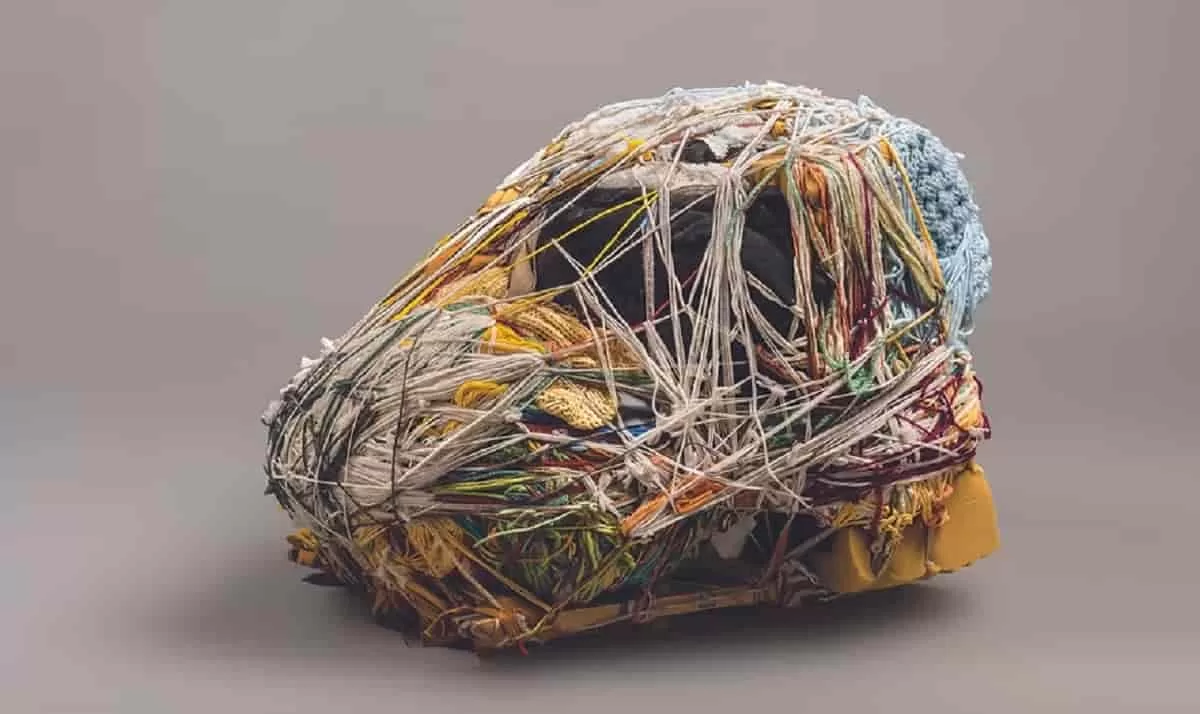
Judith Scott (1943–2005), an American sculptor, lived with Down syndrome and profound deafness. Misunderstood and institutionalized for decades, she was denied proper education and communication support. Her life changed when her twin sister brought her to California, introducing her to the Creative Growth Art Center in Oakland. The center is a studio dedicated to artists with disabilities.
Judith Scott’s Enigmatic Wrapped Sculptures and Outsider Art
Scott developed a unique method: constructing internal armatures from rigid objects and wrapping them in layers of yarn, cloth, and found materials, completely obscuring the inner forms. Her dense, enigmatic wrapped sculptures evoke organic shapes or talismanic bundles. They provide a silent yet powerful insight into her inner world. Over 17 years, Scott created more than 200 sculptures, earning international acclaim. Her works are celebrated not merely as “outsider art,” but as a significant contribution to contemporary sculpture. They explore themes of identity, transformation, and sensory experience.
The Role of Creative Growth Art Center for Artists with Down Syndrome
The support of organizations like the Creative Growth Art Center was crucial. The center offered Scott, an artist with Down Syndrome, the environment and materials needed to develop her practice. Her journey highlights the catalytic force of dedicated art programs for adults with disabilities.
The Enduring Impact and Legacy of Artists with Disabilities
Both Nnena Kalu and Judith Scott exemplify how artists with disabilities can redefine art history through resilience, ingenuity, and self-expression. Their journeys highlight systemic challenges faced by disabled artists, including prejudice, limited access, and societal assumptions about ability.
Expanding Artistic Excellence: Challenging Perceptions of Ability
Their achievements have broadened our understanding of artistic excellence, reminding us that innovation rises above limits of communication, cognition, and social norms. Nnena Kalu and Judith Scott stand as powerful examples of creativity, resilience, and transformative artistry. Through their unique visions and dedication, they have changed the way the art world perceives disability and artistic merit. Their legacy continues to be a source of inspiration, proving that artistic brilliance knows no boundaries.
Do you know other artists with disabilities? Share their profiles with us. Leave a comment.
